
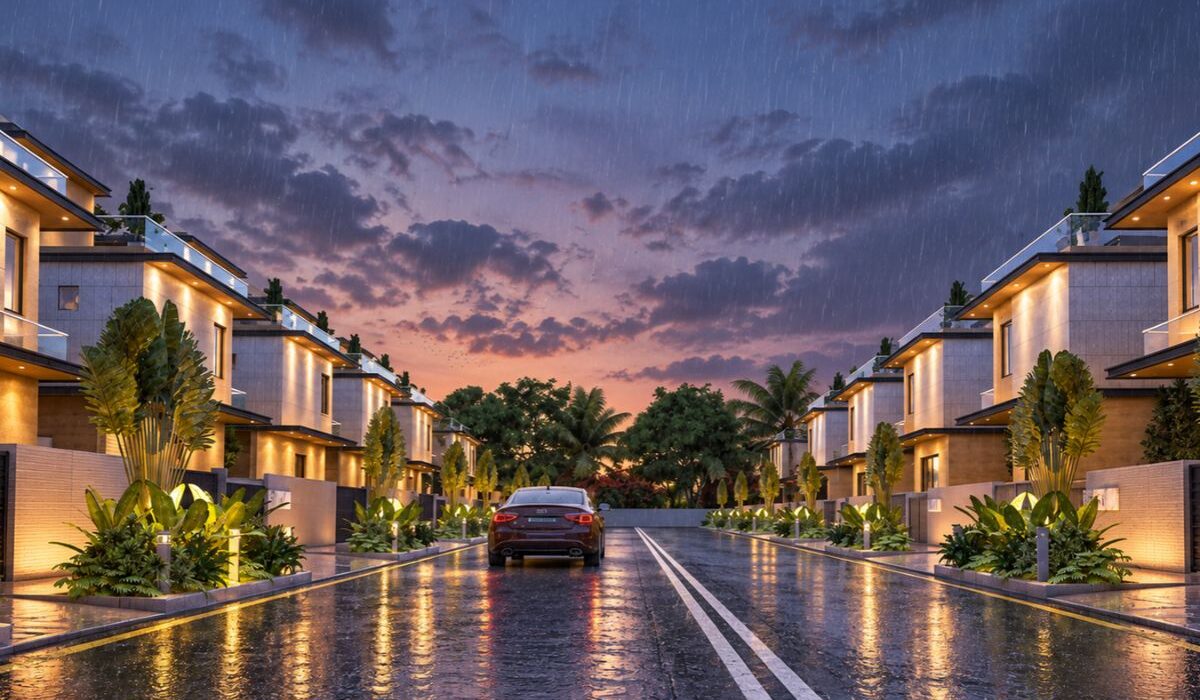
A beautiful brochure can show you what a neighbourhood looks like. A good downpour can tell you how well it has been planned.
There is something about the first spell of rain in Visakhapatnam and Vizianagaram. The temperature drops, the roads take on a familiar shine, and the greenery seems to come alive.
But anyone who has lived through a coastal Andhra monsoon knows that the rain can reveal a very different side of a neighbourhood.
A road that looked perfect last week may suddenly have standing water. A plot that appeared level may turn out to be lower than its surroundings. And a beautifully finished home may begin to show signs of moisture in places you wouldn’t ordinarily notice.
That is why one of the most useful things you can do before buying a home or residential plot is surprisingly simple.
Visit the property when it rains.
Not just when the weather is pleasant and the gardens look their best. Visit when the clouds have opened up, the drains are carrying water, and the neighbourhood is being tested.
You may learn more in those thirty minutes than you would from several routine site visits.
1. Start With the Road, Not the House
When visiting a gated community, most buyers naturally begin with the entrance, landscaping or the property itself.
During the monsoon, start with the road.
Observe where rainwater collects. Notice whether water flows towards the sides or settles in the middle. Look for puddles around junctions, entrances and pedestrian pathways.
Even a newly laid road can develop problems if its slope and surrounding drainage have not been planned properly.
This is particularly relevant in plotted developments, where internal road levels can influence the eventual height and accessibility of individual homes.
At Assure Sarayu in Denkada, Vizianagaram, the infrastructure plan includes high quality internal roads with drainage camber, paved footpaths and an underground drainage network.
These are important planning provisions because road construction is not simply about achieving a smooth driving surface. It must also account for what happens to rainwater.
For any development you are considering, ask to see how these systems have been implemented and where stormwater is intended to flow.
2. A Plot’s Elevation Matters More Than You Think
A vacant plot can be deceptive.
On a dry day, even a slight difference in ground level may be difficult to notice. During heavy rainfall, that difference can become obvious.
Water naturally moves towards lower areas. If the plot sits below the adjoining road or surrounding land, additional site preparation may be necessary before construction.
This can affect foundation planning, plinth height, driveway access and the eventual construction budget.
Before finalising a plot, ask the developer about the proposed road level, plot level and stormwater disposal arrangements.
Also inspect the surrounding properties. Does water from neighbouring land flow towards the plot? Is there a natural drainage channel nearby? Has the original terrain been altered?
A few centimetres may not look significant during a site visit, but differences in elevation and the available drainage outlet can make a substantial difference during intense rainfall.
3. Pay Attention to What You Cannot See
Some of the most valuable infrastructure in a residential community is hidden beneath the ground.
Water pipelines, electrical cables, sewage lines and stormwater drains rarely feature prominently in property photographs.
Yet these systems have a direct bearing on how comfortably a neighbourhood functions.
Consider the difference between an area with exposed utility lines and one where services have been systematically planned underground.
Underground installations can reduce visual clutter and exposure to certain weather related hazards, although they still require proper installation, protection and maintenance.
Assure Sarayu’s published infrastructure specifications include underground electricity distribution, drinking water pipelines, irrigation for green areas and a sewage treatment plant.
The important distinction is that sewage management and stormwater management serve different purposes. A treatment plant is not a substitute for an adequate rainwater drainage system.
Buyers should ask how the two systems are planned, whether they are separate, and how they are maintained.
It is a conversation worth having before making a purchase.
4. Green Spaces Should Look Good in Every Season
Landscaped gardens are among the first things that catch a buyer’s attention.
They also deserve a closer look during the rains.
Healthy greenery can help manage surface runoff, and appropriately designed planted areas can allow some water to soak into the ground. But landscaping must work with the site’s soil conditions, slopes and drainage arrangements.
Poorly planned gardens can develop persistent waterlogging, erosion and muddy walkways.
Consider the landscaped parks, outdoor recreation areas and shaded walking spaces planned at Assure Sarayu.
Or the more extensive outdoor experience at Assure Avasa, which features a 1 km green walking trail, butterfly garden, yoga lawn, sensory walkway, organic vegetable beds and outdoor fitness areas.
These are attractive features for families who enjoy spending time outdoors.
During a site visit, however, buyers should also consider how such spaces will be maintained across changing seasons.
Are the walking paths properly graded? Can excess water drain away from landscaped areas? Are the pathways accessible after rainfall? Does the greenery have an appropriate irrigation and maintenance plan?
A well designed outdoor space should be enjoyable beyond the few months when the weather is at its best.
5. The Rain Can Tell You a Lot About a Home’s Design
If you are considering a completed villa, use a rainy day to look beyond the interiors.
Inspect the ceilings, external walls, window frames, balconies and areas around plumbing fixtures.
Discoloured paint, bubbling plaster, damp patches and persistent musty smells may indicate moisture problems that deserve closer investigation.
However, not every stain means an active leak. Some problems may be old or already repaired. The important thing is to understand the cause rather than judge by appearance alone.
Ventilation is another factor that buyers often overlook.
Coastal Andhra experiences considerable humidity, particularly during the rainy months. Homes with appropriate ventilation, natural light and well considered openings can offer a more comfortable indoor environment.
Ask about waterproofing provisions, terrace drainage, balcony slopes and the maintenance required to keep these systems working.
And remember that a newly constructed home may not yet have experienced a full monsoon. In such cases, construction details, waterproofing documentation and inspection reports become especially useful.
6. Don’t Forget the Journey Home
A gated community may have excellent internal infrastructure, but its residents also depend on the roads outside its entrance.
Think about the routes you would travel every day.
How easily can you reach the nearest main road during heavy rainfall? Are there low lying stretches along the approach? Do nearby junctions experience waterlogging?
If possible, speak with people who already live or work in the surrounding area.
They can often provide practical information that is not obvious during a short site visit.
For anyone considering property around Denkada, Vizianagaram or the wider Visakhapatnam region, understanding the immediate surroundings is just as important as reviewing the development itself.
7. Ask About Maintenance Before You Ask About Amenities
A swimming pool, clubhouse, landscaped park or walking trail can enhance residential life.
But these facilities also come with ongoing responsibilities.
Rainwater outlets must remain clear. Swimming pools need appropriate water treatment and drainage arrangements. Outdoor equipment requires periodic inspection. Landscaping needs regular attention, particularly after storms.
Assure Sarayu and Assure Avasa both include a range of recreational and community facilities, from children’s play areas and fitness zones to landscaped gardens and shared spaces.
When evaluating such amenities, ask who will maintain them, how frequently inspections will take place and what arrangements will exist once the community is occupied.
After all, the long term usefulness of an amenity depends as much on its upkeep as its original design.
The Questions Worth Asking on Your Next Site Visit
Before you finalise a property, take a few minutes to ask:
- Where does rainwater from the internal roads and plots ultimately discharge?
- How do the plot and road levels compare with the surrounding land?
- Are stormwater drains and sewage lines separate?
- Are water and electrical utilities installed underground?
- What measures are included for waterproofing and moisture protection?
- How will parks, walking tracks and outdoor facilities be maintained?
- Have the internal and external access roads been inspected following heavy rainfall?
You do not need to be an engineer to ask these questions. A responsible developer should be willing to explain the systems and provide relevant documentation.
A Home Should Be Planned for More Than Sunny Days
At Assure Developers, we believe a residential community deserves as much attention below the surface as it receives above it.
Across our developments in Denkada, including Assure Sarayu and Assure Avasa, our planning brings together residential spaces, essential infrastructure, greenery and amenities intended to support everyday life.
Because a home is not experienced only on the day you receive the keys.
It is experienced through hot summers, humid evenings, unexpected showers and years of changing seasons.
So the next time you visit a property, don’t be disappointed if it begins to rain.
Stay a little longer. Look around. Ask a few more questions.
The weather might show you something the brochure never could.
Explore Assure Sarayu and Assure Avasa to learn more about our residential communities in Vizianagaram.